Anúncios
Do you ever stand before a closet packed with clothes, yet feel like you have nothing to wear? This frustrating paradox is a common experience, but it often signals a disconnect between the clothes you own and who you are. For those who seem to navigate the world with an effortless sense of confidence, their secret isn’t a bigger wardrobe—it’s a deeply understood personal style. It’s the silent language that introduces you before you even speak, a curated story told through fabric, silhouette, and color.
Many people mistakenly equate this personal expression with chasing the latest fashion trends. true style is an inside-out job. It involves moving beyond the noise of what’s ‘in’ and turning inward to discover what genuinely resonates with your lifestyle, personality, and aspirations. This process is less about a dramatic makeover and more about a thoughtful investigation. It’s about learning the principles of what makes you feel powerful, comfortable, and authentic, much like a chef masters ingredients to create a signature dish rather than just following a recipe.
But how do you begin this journey from being a passive consumer of fashion to the active director of your own aesthetic? This full guide provides the expert-backed strategies and practical tools you need. We’ll walk you through the primary exercises stylists use, from creating a visual mood board to conducting a professional-level wardrobe audit. You’ll learn how to identify quality pieces worth investing in, avoid common style mistakes, and build a versatile, functional wardrobe that not only looks good but feels unequivocally like you.
Beyond Trends: The Core Philosophy of Personal Style According to Pros
Many people mistake fashion for personal style, but industry experts see them as two very different concepts. Fashion is what you’re offered four times a year by designers, but style is what you choose for yourself. It’s an outward expression of your identity, history, and aspirations, woven into the fabric of your daily life. It’s your personal story told without words.
True personal style is less about chasing what’s new and more about understanding what is true to you. Think of it like learning to cook. Initially, you might follow recipes (or fashion trends) precisely. But with experience, you understand the ingredients and techniques, eventually creating dishes that are uniquely yours. This is the core of authentic self-expression through clothing.
Anúncios
Deconstructing ‘Effortless Chic’: What It Really Means
The term “effortless” is perhaps the most misunderstood concept in fashion. What most people miss is that looking effortless requires a significant amount of upfront effort. It’s the result of deep self-knowledge, experimentation, and a wardrobe built with intention. Renowned celebrity stylist Micaela Erlanger often emphasizes that true effortlessness comes from confidence in your choices.
This confidence isn’t accidental. It’s built by understanding your body shape, your lifestyle needs, and the colors that make you feel alive. When you know a specific silhouette works for you, you don’t have to think twice about it. That is the secret. It’s about creating a system so effective that it appears spontaneous — much of the work is done before you even open your closet door. For those just starting out, crafting your signature style is a foundational step in achieving this kind of confidence.
The Psychology Behind Your Wardrobe Choices
Your clothing choices send powerful psychological signals, both to others and to yourself. This concept, known as “enclothed cognition,” suggests that the clothes we wear can systematically influence our thought processes and behaviors. For instance, a 2022 study published in the Journal of Experimental Social Psychology found that participants who wore more formal attire demonstrated higher levels of abstract thinking compared to those in casual wear. What does your favorite outfit say about how you want to feel?
Anúncios
Fashion psychologist Dr. Anabel Maldonado explains that our wardrobes are often a subconscious archive of our emotions and experiences. “We don’t just choose a sweater; we choose a feeling—comfort, authority, creativity,” she notes. This emotional connection is why a certain jacket can make you feel invincible or why a specific dress is reserved for special occasions. It’s a silent language that communicates our inner state, a phenomenon clearly visible in the way personal style is reshaping celebrity influence by creating more authentic connections with audiences.
Ultimately, your style is an evolving dialogue between your inner self and the outside world, a visual narrative that you get to direct every single day.
The Stylist’s Toolkit: Practical Exercises for Self-Discovery
Understanding the “why” behind your style is one thing, but translating that feeling into a functional wardrobe requires a more hands-on approach. Professional stylists don’t just wave a magic wand; they use specific, repeatable exercises to decode a client’s aesthetic DNA. These methods strip away the noise of fleeting trends and focus on what resonates with you. It’s less about a dramatic makeover and more about a guided conversation with yourself.
Think of it as a personal style investigation. You are both the detective and the subject. The goal is to gather clues from your own life, preferences, and even your existing clothes to build a case for your authentic look. Surprisingly, what most people miss is that the answers are usually already there, just buried under years of impulse buys and external expectations.
Curating Your Visual Narrative: The Mood Board Method
Before you even think about touching your closet, you need a visual destination. A mood board is your North Star. Using a platform like Pinterest or even a physical corkboard, start collecting images that give you an instinctive positive reaction. Don’t overthink it—if a picture of a windswept coastline, a minimalist interior, or a particular celebrity’s street style catches your eye, save it.
After gathering at least 50-100 images, look for the patterns. Are you consistently drawn to tailored blazers, flowing fabrics, or bold, graphic prints? Notice the color palettes, the silhouettes, and the overall mood. This isn’t about copying specific outfits you see online; it’s about identifying the recurring themes that make up your unique visual language. This collection becomes the blueprint for everything that follows.
The Wardrobe Audit: A Professional’s Step-by-Step Guide
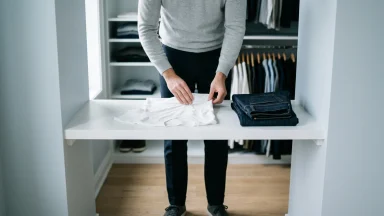
With your visual guide in hand, it’s time to face your closet. A wardrobe audit is a systematic process of evaluating every single item you own. It’s an primary step in crafting your signature style from the ground up. Prepare yourself with four distinct piles or boxes: Keep, Repair, Donate/Sell, and Maybe.
- The “Keep” Pile: These are your workhorses. They fit you perfectly right now, you feel great wearing them, and they align with your mood board’s aesthetic. Ask yourself: If I were shopping today, would I buy this? A “yes” means it’s a keeper.
- The “Repair” Pile: This category includes items you love but that need some attention—a missing button, a small stain, or tailoring. Setting these aside with a clear action plan prevents them from languishing in your closet unworn.
- The “Donate/Sell” Pile: Be ruthless here. This pile is for anything that doesn’t fit, pieces that no longer reflect your identity, or items you haven’t worn in over a year. A survey from the Parsons School of Design found that the average person only wears 28% of their wardrobe, so letting go is a common and necessary step.
- The “Maybe” Box: This is for sentimental items or pieces you’re unsure about. Box them up and store them away for six months. If you don’t miss them or think about them in that time, you have your answer.
This process is revealing. It shows you what you value.
Identifying Your Style Archetypes
As you sort through your “Keep” pile, you’ll start to see categories emerge. These are your style archetypes. Perhaps you have a “Weekend Casual” self who loves denim and cozy knits, and a “Professional” self who relies on sharp blazers and silk blouses. You might even discover an “After Hours” persona drawn to leather and darker colors. Naming these archetypes—inspired by icons you admire or even the style of certain celebrities—helps you understand the different facets of your personality and shop more intentionally for each one.
Color and Fabric: Understanding Your Best Allies
The final layer of discovery involves an analysis of color and texture. Look at the dominant colors in your mood board and your “Keep” pile. Do you gravitate towards warm, earthy tones or cool, crisp shades? What about fabrics? The feel of a garment against your skin is a powerful—and often overlooked—element of personal style. Someone who loves the structure of raw denim might feel completely out of place in soft, unstructured linen.
You don’t need a formal color analysis to start (though they can be helpful). Simply pay attention to which colors earn you compliments and which ones make you feel vibrant and confident. This intuitive data, combined with an understanding of the textures you love, provides the final, key details for defining a style that feels like you. Now you have a framework, not just a closet full of clothes.
We don’t just choose a sweater; we choose a feeling—comfort, authority, creativity.
— Dr. Anabel Maldonado, Fashion Psychologist
| Strategy | Key Action |
|---|---|
| Define Your Vision | Create a mood board (digital or physical) to collect images that instinctively appeal to you, identifying recurring themes, colors, and silhouettes. |
| Assess Your Assets | Conduct a thorough wardrobe audit, sorting every item into ‘Keep,’ ‘Repair,’ ‘Donate/Sell,’ and ‘Maybe’ categories. |
| Identify Core Elements | Analyze your ‘Keep’ pile and mood board to determine your go-to color palettes and preferred fabric textures. |
| Invest Strategically | Focus on building a capsule wardrobe of high-quality, versatile basics that form the foundation of your look. Prioritize quality over quantity. |
| Refine and Evolve | Regularly review your style to ensure it aligns with your current lifestyle, career, and personal growth, adapting as needed. |
Investing in Your Aesthetic: Quality vs. Quantity from an Expert Lens
Once you’ve done the work to define your aesthetic, the next step is translating that vision into a functional wardrobe. Many people fall into the trap of fast fashion, chasing fleeting trends with a closet full of clothes but nothing to wear. The professional approach flips this script, prioritizing fewer, better things. It’s a shift from a consumer mindset to an investor mindset.
This isn’t about being boring or restrictive; it’s about strategic curation. Building a wardrobe of quality pieces is like preparing a gourmet meal—you start with superior ingredients. A study from the Boston Consulting Group suggests that nearly 60% of consumers are now more willing to pay a premium for brands that demonstrate sustainability. People are beginning to understand that the initial sticker shock of a well-made garment is often offset by its longevity and versatility.
The Capsule Wardrobe: A Foundation for Lasting Style
The concept of a capsule wardrobe is central to this investment philosophy. It involves curating a limited selection of interchangeable items that work together. Think of it as your style’s greatest hits album. This core collection should consist of high-quality, timeless pieces like a perfect-fitting blazer, classic denim, a versatile trench coat, and neutral-toned knitwear. These are the items that do the heavy lifting in your closet.
This is where the beginner’s guide to authentic personal style meets practical application. With a strong foundation, integrating a few new pieces each season becomes simple and impactful. You can easily adapt your core items to reflect emerging everyday fashion trends without overhauling your entire wardrobe. The goal is efficiency and confidence, not a closet bursting at the seams.
Decoding Fabric Quality: What to Look For
So, how do you identify a piece worth the investment? It often comes down to the material and construction. Before you buy, take a moment to feel the fabric. Natural fibers like cotton, linen, wool, and silk generally wear better and feel more comfortable than synthetics like polyester or acrylic. Check the density of the weave—hold it up to a light source. If you can see right through it (and it’s not meant to be sheer), it’s likely a lower-quality fabric.
Stitching is another dead giveaway. Look for straight, tight, and consistent seams with a high stitch count per inch. Tug gently at the seams to see if they pull apart. A well-made garment will feel solid and structured. Paying attention to these small details—things most shoppers overlook—is what separates a fleeting purchase from a true fashion investment that will serve you for years to come.
Adapting Your Signature: Personal Style Across Life Stages and Occasions
Your personal style is not a fixed destination but a journey that mirrors your life’s path. A recent survey by the Global Fashion Agenda found that 68% of consumers reported a significant style shift after a major life event like a career change or becoming a parent. What feels right in your twenties might not resonate in your forties, and that’s perfectly normal. This evolution is a sign of growth, not inconsistency.
Think of your core aesthetic as the operating system on your phone—the underlying code remains consistent, but the apps and interface get updated to suit new needs. A promotion might require more structured blazers, or a move to a new city could inspire different color palettes. The goal isn’t to start from scratch but to intelligently edit and refine your existing authentic personal style for new contexts.
Versatility becomes your most valuable tool.
The underrated factor here is mastering adaptable pieces and smart layering. A silk camisole that works under a blazer for a board meeting can be worn on its own for a night out. Investing in high-quality, neutral-toned basics (a great trench coat, the perfect-fit jeans, a cashmere sweater) provides a stable foundation for experimenting with current women’s fashion trends. These foundational items ensure that even as you adapt your look for different occasions, your signature remains clear, offering countless outfit ideas without a complete wardrobe overhaul.
The Pitfalls to Avoid: Common Style Mistakes According to Fashion Insiders
Navigating the world of personal style often means sidestepping a few common traps. The most frequent misstep, according to industry stylists, is chasing trends without considering personal fit or lifestyle. A report from the NPD Group noted that nearly 48% of fast-fashion purchases are worn less than five times, often because they don’t align with the buyer’s core aesthetic. Instead of blindly adopting what’s new, the goal is to interpret trends, a skill that helps in demystifying fashion trends for your own wardrobe.
Another major hurdle is overlooking the importance of proper fit. You can have the most beautiful, expensive garment, but if it doesn’t fit your body correctly, the entire look falters. This is like trying to bake a cake with the wrong-sized pan—the ingredients might be perfect, but the final result is slightly off. What most people miss is that tailoring isn’t a luxury; it’s a tool that can completely alter the success of your outfit ideas. Why invest in a piece if you’re not going to make it look its best on you?
Ignoring comfort for the sake of style is a battle you will always lose.
Finally, many people get stuck in a style rut, wearing the same formulas out of habit or fear of change. While consistency is good, rigidity is not. Experimenting doesn’t mean you have to overhaul your entire closet (a common misconception!). It can be as simple as trying a new color combination or accessory. Learning to step outside your comfort zone is a core lesson in any beginner’s guide to authentic personal style, pushing you to continuously refine and enjoy your look.
Cultivating Your Unique Voice: From Inspiration to Implementation
Moving from a mood board to a functional wardrobe is where the real work of defining your personal style begins. It’s one thing to admire an aesthetic and another entirely to live in it. This final step is less about buying new clothes and more about building the courage to wear them in a way that feels authentic to you. It’s about translating abstract ideas into concrete daily choices.
The goal isn’t a perfect replication of someone else’s look. It is a personal interpretation. Think of it like a musician learning a classic song; they learn the notes first, but the magic happens when they add their own rhythm and feeling. This is your solo.
Drawing Inspiration Without Imitation
A common pitfall is mistaking inspiration for a direct instruction manual. Seeing a celebrity or influencer wear an outfit you love is a great starting point, but copying it piece-for-piece often feels hollow. Why does it feel so different? Because style is deeply connected to personality, body language, and context. The underrated factor here is adapting, not adopting. Take the core elements you admire—perhaps it’s the color palette, a specific silhouette, or the mix of textures—and integrate them into your existing wardrobe framework.
This process is about asking what specifically drew you to that look. By breaking it down, you extract the essence without getting lost in the details. This is the foundation for crafting an authentic look that genuinely reflects who you are, rather than who you’re trying to emulate. It’s a subtle but significant distinction.
The Power of Accessories: Elevating Your Signature
Accessories are the punctuation marks of your style sentence. They can completely change the tone of an outfit, turning a simple base of jeans and a t-shirt into something intentional and unique. According to celebrity stylist Anya Petrova, “I tell my clients that their core wardrobe should be the canvas. The jewelry, bags, scarves, and shoes are the paint. That’s where you express your signature.” This is where you can experiment with trends at a lower commitment level.
Start by identifying one or two categories of accessories you naturally gravitate towards. Maybe it’s a collection of unique earrings, a specific style of handbag, or a love for silk scarves. Focusing your energy here allows you to build a cohesive collection that amplifies even the simplest of outfits, making them distinctly yours. These pieces often become conversation starters—and isn’t that what personal expression is all about?
Footwear as a Statement Piece
Never underestimate the impact of your shoes. They ground your entire look, both literally and figuratively. A pair of classic trousers can read as corporate with pumps, edgy with combat boots, or relaxed with minimalist sneakers. Investing in two or three pairs of high-quality, statement shoes that you love can provide more versatility than a dozen new clothing items. They are often the first thing people notice and can single-handedly define the mood of your ensemble, making them a powerful tool in your style arsenal.
Building Confidence Through Consistent Styling
Confidence isn’t something you find; it’s something you build through action. The initial phase of debuting a new style can feel like wearing a costume. Push through that discomfort. The more you wear your chosen looks, the more they become a natural extension of yourself. It’s a simple feedback loop: wearing the clothes builds confidence, and that confidence makes you wear the clothes even better.
A study from the *Journal of Fashion Marketing and Management* found that 67% of participants reported a notable increase in self-esteem after consciously dressing in their desired personal style for 30 consecutive days. Consistency recalibrates how you see yourself and, subsequently, how others perceive you. Even professionals go through this—just look at how celebrity styles evolve over time with guidance and experience.
Don’t be afraid to solicit feedback from a trusted friend whose style you admire, but filter their opinions through your own internal compass. Ultimately, your style is for you. The ongoing process of refinement—tweaking silhouettes, trying new combinations, and discarding what no longer serves you—is not a sign of failure but a mark of a developed aesthetic voice.
Your Style as a Living Document
Ultimately, defining your personal style is not about arriving at a final, static destination. It is not a project to be completed, but a practice to be cultivated. Think of it as a living document that you will continue to edit, refine, and add to throughout your life. The wardrobe you build is merely the byproduct of a much more valuable endeavor: the process of getting to know yourself on a deeper level.
As you move forward, the real challenge isn’t just maintaining your closet, but staying attuned to your own evolution. What will your style say about you five years from now? The confidence gained from this journey—the ability to make intentional choices and express your identity visually—will likely extend far beyond your wardrobe, influencing how you present yourself in all areas of your life. The most stylish thing you can ever own is that self-awareness.
Frequently Asked Questions
How do I find my personal style if I’m overwhelmed by trends?
Start by tuning out the noise. Create a private mood board on Pinterest with images that you’re instinctively drawn to, regardless of current trends. Then, look at your existing clothes and identify the few pieces you wear constantly and feel great in. The patterns between these two sources are the foundation of your authentic style.
What’s the difference between fashion and personal style?
Fashion is external; it’s what designers and brands present each season. Personal style is internal; it’s how you interpret fashion and express your unique identity through your clothing choices. Think of fashion as the available vocabulary and style as the story you choose to tell with it.
How can I make my existing wardrobe reflect my new personal style?
Begin with a wardrobe audit to remove what no longer serves you. Next, take key pieces to a tailor; proper fit can completely transform a garment. Finally, use accessories like belts, jewelry, and shoes to shift the mood of your existing outfits and align them with your new aesthetic direction.
Should I hire a personal stylist, and what should I expect?
Hiring a stylist is a great option if you want an expert, objective perspective to accelerate the process. Expect them to help you define your aesthetic, conduct a thorough wardrobe audit, create a strategic shopping list, and teach you how to put outfits together. They can save you time and prevent costly shopping mistakes.
How do I maintain my personal style on a budget?
Adopt a ‘quality over quantity’ mindset. Prioritize saving for versatile, well-made basics that will last for years. Explore thrift and consignment stores for high-quality brands at a lower price, and learn the power of tailoring to make more affordable pieces look expensive and custom-fit.