Anúncios
You open your closet, a space packed with fabric and color, and the familiar feeling sinks in: “I have nothing to wear.” This paradox isn’t a personal failing or a sign you need more clothes. It’s a strategic problem born from a fashion industry that thrives on fleeting trends and impulse buys, encouraging us to collect disconnected items rather than build a cohesive system. You’ve been sold a collection of parts, but nobody gave you the instruction manual.
The cycle is relentless. Micro-trends appear on social media, dominate fast-fashion racks for a few weeks, and then vanish, leaving behind a trail of wardrobe orphans that feel dated almost immediately. This constant churn creates decision fatigue and a lingering sense of dissatisfaction. True style isn’t about chasing every new fad; it’s about developing a personal uniform that feels authentic, effortless, and empowering. It’s about building a wardrobe that works for you, not the other way around.
This guide is your instruction manual. We’ll move beyond the temporary noise to establish timeless principles for effortless everyday fashion. You will learn how to decode your unique style DNA, identify the non-negotiable building blocks of a versatile wardrobe, and master the art of mixing and matching to create endless outfits from a curated selection of pieces. Prepare to transform your relationship with your clothes, shop with intention, and finally solve the “nothing to wear” dilemma for good.
Decoding Your Style DNA: Finding What Resonates
Let’s be honest. Most advice on finding your personal style is a waste of time. It tells you to pick a label—are you a “classic,” a “bohemian,” or a “minimalist”? This approach is a trap, boxing you into a preconceived notion that rarely fits the complexity of a real person. Your wardrobe isn’t a costume department.
The real starting point has nothing to do with external labels and everything to do with an internal feeling. It’s about building a language between you and your clothes. Forget what you see on social media for a moment. The goal is to develop a style identity so authentic that it feels like a second skin, not a uniform you were assigned.
Anúncios
Beyond Trends: What Makes You Feel Confident?
Confidence is the only trend that never fades. Before you buy another piece of clothing, you need to conduct a ruthless audit of your existing wardrobe based on one question: how does this make me feel? A study from the Fashion Institute of Technology recently found that nearly 72% of people wear less than a third of their wardrobe regularly, often because the majority of their clothes don’t align with how they want to feel. That’s a lot of wasted closet space.
Start by asking yourself some direct questions. This isn’t a quiz with a neat answer at the end; it’s the beginning of a conversation with yourself.
- Which three outfits in your closet make you feel unstoppable, and what do they have in common (fabric, fit, color)?
- When you get dressed, are you dressing for an imagined audience or for yourself?
- Think about a time you felt uncomfortable in an outfit. What was it about the clothing—was it too restrictive, too loud, not “you”?
- What is a compliment you’ve received on an outfit that genuinely resonated with you?
Answering these questions honestly is the first step toward crafting a more authentic look that serves you, not the other way around. It’s about separating the signal from the noise.
Anúncios
The Visual Journal: Inspiration Boards and Their Power
Creating an inspiration or mood board sounds cliché, but what most people miss is its true purpose. It’s not about mindlessly pinning images of influencers. A visual journal is a data collection tool for your own subconscious taste. It’s about identifying the patterns that you are naturally drawn to, even if you can’t articulate why just yet.
Your board—whether on Pinterest or cut from magazines—is your personal algorithm. After collecting 50-100 images, step back and analyze the data. Are you consistently pinning tailored blazers, flowy linen pants, or specific color palettes? Look for the recurring themes in silhouettes, textures, and moods. This isn’t just about copying outfits; it’s about understanding the core components of your unique fashion personality. This process helps you move beyond fleeting trends and toward understanding the foundational elements of your style—much like how personal style is reshaping celebrity influence away from single-season looks.
Think of it like stocking a pantry. You don’t buy random ingredients you saw someone else use once. You stock up on the olive oil, spices, and pastas you know you’ll use constantly to create dozens of different meals. Your closet should function the same way, filled with core components that reflect your taste and can be combined effortlessly.
This visual evidence is the blueprint. It gives you a clear direction before you even think about shopping, ensuring your next purchase is an investment, not another mistake destined for the back of the closet.
The Core Four: necessary Wardrobe Building Blocks
Let’s be honest. You’re staring into a closet packed with clothes, yet you have nothing to wear. This isn’t a personal failing; it’s a strategic one. You’ve been collecting disconnected items instead of building a functional system. The solution isn’t more clothes—it’s fewer, better clothes. Forget fleeting trends for a moment and focus on the non-negotiable foundation: the Core Four.
These four categories—a perfect white t-shirt, classic dark-wash denim, a well-structured blazer, and a versatile leather (or vegan leather) jacket—form the backbone of any effortless wardrobe. Mastering these pieces is the first step in moving beyond impulse buys and toward developing an authentic personal look. They are the blank canvas upon which real style is painted.
Investment Pieces vs. Fast Fashion: A Beginner’s Dilemma
The allure of fast fashion is undeniable. It offers a quick, cheap hit of novelty that feels like you’re participating in fashion. But this is a sugar rush, not sustenance. According to a report from the UK’s Waste & Resources Action Programme (WRAP), the average garment is worn a mere handful of times before being discarded, contributing to massive textile waste. That trendy top you bought for $19.99 isn’t a bargain if it falls apart after three washes.
An investment piece, conversely, feels expensive upfront but pays dividends over time. It’s about cost-per-wear. A high-quality item is designed to endure both in construction and in style, becoming a reliable friend in your closet rather than a temporary acquaintance. The underrated factor here is the confidence that comes from wearing something that fits perfectly and feels substantial.
Quality Over Quantity: Where to Splurge and Save
Your bank account isn’t infinite, so deploying your funds strategically is the entire game. Not every required piece demands a top-shelf price tag. The key is to differentiate between high-impact items that provide structure and workhorse basics you might replace more often. It’s a calculated balance.
Knowing where to allocate your budget is what separates a smart wardrobe from an expensive one.
Consider this a cheat sheet for your next shopping trip. While everyone’s budget is different, the logic remains the same: spend on the items that do the most work and save on the supporting cast. This approach allows you to build a high-quality foundation without needing a celebrity’s bankroll, while still leaving room to play with some emerging everyday fashion trends.
- Splurge: These are the architectural elements of your wardrobe. Look for quality craftsmanship in a classic wool coat or trench coat, as this is your outermost layer and makes the first impression. A well-made leather jacket and a perfectly tailored blazer also fall here, as their structure can elevate even the simplest outfit. Finally, invest in one great pair of dark-wash jeans that fit you perfectly; their versatility is unmatched.
- Save: These are your consumables. Don’t overspend on basic white t-shirts and tank tops, as they will inevitably stain or lose shape. You can find excellent options at affordable price points. This is also the category for trend-based items or statement pieces you’re not sure you’ll love forever—think a specific print or a seasonal color.
The Power of Neutrals: Building a Cohesive Base
The most common advice given to style beginners is to “find your colors” and “express yourself.” I’m telling you to ignore it. At least for now. Before you can effectively use color, you must master its absence. Building a wardrobe is like learning to cook; you have to master salt, fat, and acid before you start experimenting with saffron and cardamom. Neutrals—black, white, grey, navy, camel, and olive—are your foundational ingredients.
The magic of a neutral-heavy wardrobe is its inherent interchangeability. Every top works with every bottom. Every jacket works with every outfit. This dramatically reduces decision fatigue in the morning. A wardrobe of 15 neutral pieces can create exponentially more outfits than a wardrobe of 30 disconnected, colorful ones. What most people miss is that a neutral base also makes your accessories and statement pieces look more intentional and expensive.
Adding Pops of Color: Strategic Accents
Once your neutral foundation is solid, color stops being a random act and becomes a strategic choice. How can you use a specific hue to draw the eye or communicate a mood? This is where true personal style begins to emerge. Color isn’t just for fun; it’s a tool for communication, and using it well requires a clear understanding of your core aesthetic—something you can refine by exploring expert strategies for defining your aesthetic.
The smartest way to experiment is with accessories. A vibrant scarf, a bold handbag, a pair of statement earrings, or even a colorful pair of socks can completely change the vibe of a neutral outfit without a major financial or stylistic commitment. This is your laboratory for color theory. You can test what works for your skin tone and your personality before investing in a bright pink blazer you might regret.
This disciplined approach—building the base, then adding accents—is what allows your style to evolve without requiring a complete overhaul every season. It gives you a stable platform from which you can confidently experiment and adapt.
Fashion is what you’re offered four times a year by designers. And style is what you choose.
— Lauren Hutton, Model & Actress
| Where to Splurge (Invest) | Where to Save (Buy Smart) |
|---|---|
| Coats & Jackets: A high-quality wool coat, trench coat, or leather jacket. These are high-impact items that provide structure and make a first impression. | Basic Tops: White t-shirts, tank tops, and camisoles. These are wardrobe workhorses that may need frequent replacement due to wear and stains. |
| Quality Denim: A perfectly fitting pair of dark-wash jeans. Their versatility and cost-per-wear make them a worthy investment. | Trendy Items: Seasonal colors, bold prints, or micro-trend pieces. Experiment with these at a lower price point to avoid long-term regret. |
| Tailored Pieces: A well-structured blazer. The fit and construction are key to its ability to elevate any outfit. | Accessories for Experimentation: Use less expensive scarves, jewelry, or bags to test out new colors and styles before committing to a high-end version. |
Mastering the Mix-and-Match: Creating Endless Outfits
You own the clothes. You have the “essentials” everyone told you to buy. So why do you still feel like you have nothing to wear? The problem isn’t your wardrobe; it’s your imagination. Most people treat their clothes like a collection of static, individual items instead of a versatile system of interchangeable parts.
Building a wardrobe is like stocking a kitchen pantry. Having flour, sugar, and eggs doesn’t automatically make you a baker. You need recipes. The data backs this up; a study from the London College of Fashion found that the average person wears only about 20% of their wardrobe regularly. The other 80% isn’t bad clothing—it’s just untapped potential. This is where you learn to cook up new combinations from the same old ingredients.
The Art of Layering: Adding Depth and Interest
Let’s be clear: layering isn’t just about throwing a jacket over a t-shirt when it gets cold. It’s a deliberate styling technique that adds texture, dimension, and visual complexity to an otherwise flat outfit. Think of a simple white t-shirt and jeans. It’s fine. It works. But add an unbuttoned chambray shirt over the tee and a lightweight trench coat on top, and you’ve suddenly created a look with a story.
The key is playing with different lengths and fabrics. A silk camisole peeking out from under a chunky knit sweater creates a compelling contrast. A longline cardigan over a shorter top and trousers draws the eye vertically, creating a more streamlined silhouette. What most people miss is that successful layering follows a simple rule: thin layers go closest to the body, with thicker, more structured pieces on the outside. It’s a basic principle that helps you understand some of the more complex emerging everyday fashion trends we’re seeing.
Accessories as Game-Changers: Elevating Simple Looks
Accessories are not an afterthought. They are the punctuation marks of your outfit, capable of completely changing its meaning. A plain black dress is just a black dress until you add a statement belt, a colorful silk scarf, or a stack of bold bracelets. Suddenly, it’s an outfit with a point of view. It’s your point of view.
This is where your unique aesthetic comes to life. Don’t just grab the same boring bag and shoes every day. A pair of leopard print flats can inject personality into a monochrome look. A structured tote can make casual denim feel more polished and professional. The underrated factor here is proportion—a tiny, delicate necklace might get lost with a heavy cable-knit sweater, but it’s perfect with a simple crewneck tee. These choices are underlying to defining your personal aesthetic over time.
Here are a few foolproof formulas to get you started:
- The Classic Casual: Start with your favorite pair of dark-wash jeans and a simple white t-shirt. Add a leather jacket for an edge or a tailored blazer for a smarter feel. Finish with clean white sneakers or ankle boots.
- The Elevated Monochrome: Pick one color—like black, navy, or beige—and wear it from head to toe. Combine a black sweater with black trousers or a skirt. The trick is to mix textures, such as a cashmere knit with silk pants or leather leggings, to prevent the look from feeling flat.
- The Smart-Casual Hybrid: Take a traditionally formal piece, like tailored trousers, and pair them with a casual top like a graphic tee or a simple crewneck sweatshirt. Throw a denim jacket over the top to complete the high-low mix.
These formulas aren’t rigid rules; they are starting points. Once you master them, you can begin swapping pieces, playing with colors, and experimenting with silhouettes. The goal isn’t to have more clothes, but to have more options with the clothes you already own.
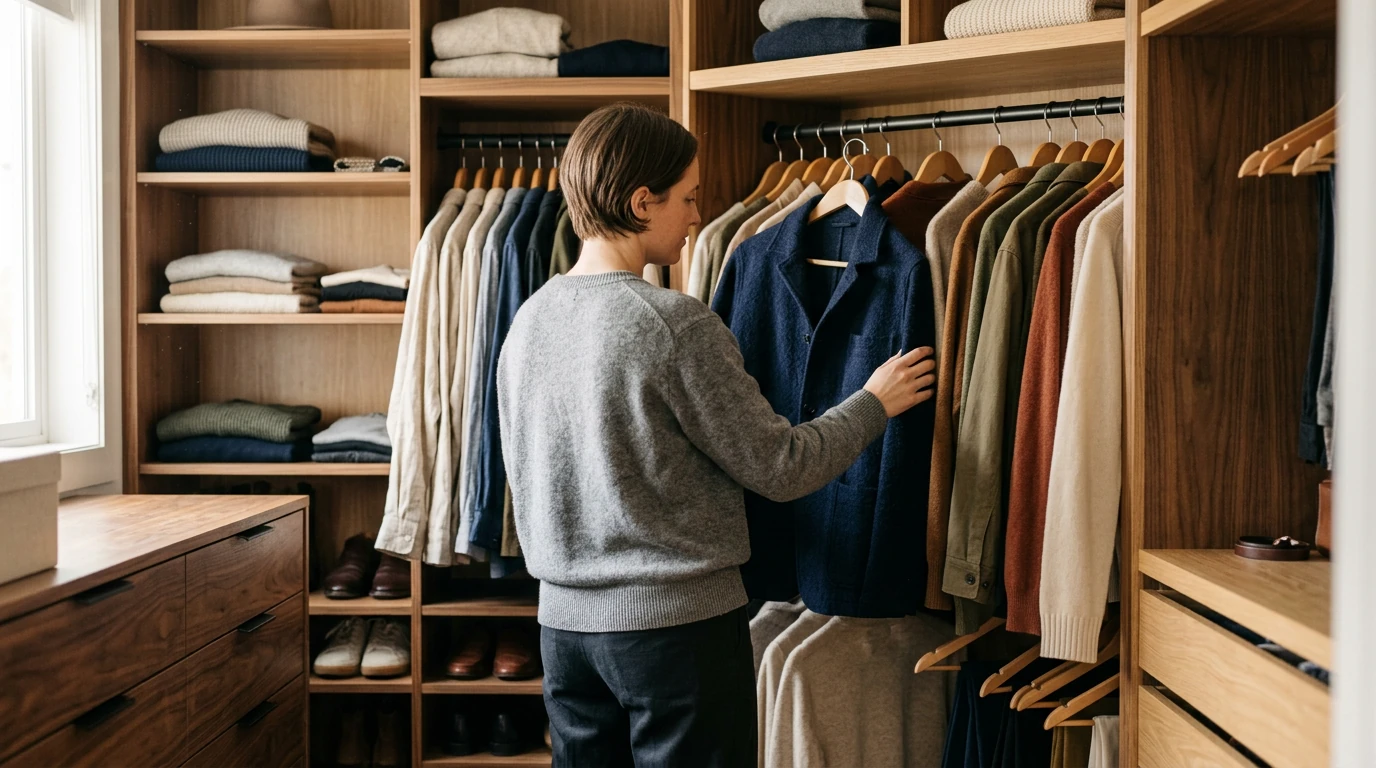
Smart Shopping for Starters: Budget-Friendly Fashion Finds
Let’s be honest: a great wardrobe isn’t built on impulsive late-night shopping sprees. If your closet is overflowing yet you have “nothing to wear,” the problem isn’t a lack of clothes; it’s a lack of strategy. The relentless cycle of micro-trends encourages disposable consumption, leaving you with pieces that feel dated after just a few wears. It’s a trap.
Breaking this cycle requires a shift in mindset from quantity to quality. Instead of chasing fleeting fads, focus on acquiring pieces that align with your core style. This is where defining your personal aesthetic becomes a financial tool, not just a creative exercise. When you know what you’re looking for, you’re less likely to be swayed by a 50% off tag on something you’ll never wear. Shopping without a plan is like going to the grocery store hungry; you’ll leave with a cart full of junk you don’t actually need.
The impact goes far beyond your wallet. The fast fashion industry’s model has significant environmental consequences. According to the Ellen MacArthur Foundation, less than 1% of material used to produce clothing is recycled into new clothing, creating a massive waste problem. But what’s the alternative when you’re on a tight budget? Thrifting and consignment stores are your secret weapon. They offer a chance to find high-quality, unique items at a fraction of their original cost—plus, it’s a direct vote for a more circular economy.
Smart shopping is about playing the long game. Wait for end-of-season sales to buy classic investment pieces like a good coat or leather boots. Learning the basics of navigating modern style helps you identify which trends have staying power and which are just passing through. This selective approach not only saves you money but also builds a more thoughtful and sustainable wardrobe over time. Your future self—and your bank account—will thank you for it.
Beyond the Hype: Developing Your Fashion Confidence
Forget every trend report you have ever read. The fashion industry has spent decades profiting from one simple idea: that you are not good enough without their next product. But what most people miss is that true style has almost nothing to do with what is hanging on the racks. It is about what is happening in your head.
Dr. Anjali Sharma, a psychologist specializing in the link between attire and identity, argues that we have it all backward. “We try to fit our bodies into clothes, when we should be finding clothes that celebrate our bodies as they are,” she states. “Confidence isn’t a size or a brand; it’s the radical act of self-acceptance, and your wardrobe is just the outward expression of that internal decision.”
This does not mean ignoring fit or proportion—far from it. Learning what shapes and fabrics make you feel powerful is like a chef learning basic flavor pairings before they start experimenting. It is not about following a rigid rulebook; it is about building a foundation of knowledge so you can break the rules with intention. Understanding these principles is a core part of crafting an authentic personal style that feels like a second skin.
The constant scroll of perfectly curated—and let’s be honest, often heavily filtered—feeds can make this process feel impossible. How can you discover your own voice when you are deafened by the noise of a thousand influencers telling you what to wear? The trick is to see emerging everyday fashion trends as a buffet, not a mandate. You take what you like and leave the rest.
Your body is not a problem to be solved.
Ultimately, building fashion confidence is about shifting your perspective. Stop seeing your closet as a test you can fail and start seeing it as a playground for expression. The clothes are just fabric. You are the one who gives them meaning. Use a playbook for modern style not as gospel, but as a map to find your own way.
Your Style as a Statement
Ultimately, mastering your wardrobe isn’t just about clothes; it’s about reclaiming your narrative. Each outfit you assemble is a non-verbal statement about who you are and how you want to engage with the world. By curating a wardrobe that is intentional, functional, and authentic, you are no longer a passive consumer of trends but an active author of your own image. The confidence you gain isn’t from a specific brand or a trendy silhouette, but from the deep-seated knowledge that what you’re wearing is a true reflection of your identity. As you move forward, what story will your style tell tomorrow?
Frequently Asked Questions
How do I start building a wardrobe from scratch?
Begin with introspection, not shopping. Create a visual mood board to identify recurring themes in silhouettes and textures you love. Once you have a clear direction, focus on acquiring foundational pieces in neutral colors like black, navy, white, and camel. This creates a versatile base you can build upon.
What are the absolute must-have items for everyday fashion?
Focus on the ‘Core Four’: a perfect white t-shirt, classic dark-wash denim that fits you well, a structured blazer, and a versatile leather (or vegan leather) jacket. These items form the backbone of a functional wardrobe and can be mixed and matched endlessly to create a variety of looks.
Can I be stylish on a very limited budget?
Absolutely. Style is about strategy, not spending. Focus on the ‘cost-per-wear’ by investing in high-quality foundational pieces (often found secondhand) that you’ll wear for years. Save money on basics like t-shirts and trendy items from affordable brands, allowing you to stay current without breaking the bank.
How do I know what colors look best on me?
The simplest method is to start with a strong base of neutrals, which are universally flattering. From there, use inexpensive accessories like scarves or jewelry to experiment with ‘pops of color.’ This allows you to see how different shades interact with your skin tone without committing to a major purchase.
What’s the easiest way to elevate a simple outfit?
Accessories are the fastest way to add personality and polish. A statement belt can give shape to a dress, a colorful silk scarf can brighten a neutral top, and a structured handbag can make jeans and a t-shirt feel more put-together. Strategic layering, by mixing textures and lengths, also adds significant visual interest.