Anúncios
how to mix textures like leather and silk effectively: choose a dominant texture, balance proportions by pairing structured leather with flowing silk, match colors and finishes, test combos with small accessories, and keep one clear focal point for a cohesive, polished outfit.
how to mix textures like leather and silk effectively can turn a safe outfit into a memorable one. Curious how to balance edge and softness? Start with a single contrasting piece—say a silk blouse under a leather jacket—and you’ll see how texture creates depth without overdoing it.
Understanding the visual impact of leather and silk
how to mix textures like leather and silk effectively starts with seeing how each fabric speaks. Leather feels strong and structured, while silk moves and shines.
Small choices in color, scale, and finish decide if a pairing looks smart or off. These tips help you use texture with purpose.
Anúncios
Why leather reads as bold
Leather adds weight and edge. It catches light and creates crisp lines that shape the silhouette. Use it where you want structure—jackets, skirts, or boots.
How silk adds softness
Silk reflects light softly and drapes with motion. It brings fluid lines and a gentle sheen that balances leather’s firmness.
- Contrast: Place silk near the face to soften a leather jacket.
- Balance: Pair one statement leather piece with a modest silk item.
- Finish: Matte leather with glossy silk gives subtle depth.
- Color: Neutrals unify; a single bold hue creates drama.
Start with one dominant texture and let the other support it. If leather is the focus, choose silk in smaller elements like a blouse or scarf. If silk leads, add leather accessories to ground the look.
Anúncios
Proportions matter: roomy silk tops with slim leather bottoms feel modern, while a tailored leather jacket over a flowing silk dress reads intentional and balanced.
Practical pairing tips
Think about touch and movement. Keep silk close to the face for softness and place leather where you want structure, such as shoulders or hems. Limit busy patterns so texture remains the star.
With careful choices in contrast, scale, and color, you can create outfits where leather and silk enhance each other and feel cohesive.
Choosing colors and finishes that harmonize
how to mix textures like leather and silk effectively often comes down to smart color and finish choices. The right tones and sheens can pull two different fabrics into one clear look.
Think of color as the link and finish as the mood. Small swaps in hue or gloss can make an outfit read polished instead of mismatched.
Pick a clear base palette
Start with a dominant color family: neutrals, jewel tones, or a single accent hue. Neutrals like black, tan, or cream let leather and silk play off each other without fighting.
Try black leather with an ivory silk blouse, or warm tan leather with a soft blush silk. These pairings keep contrast calm and intentional.
Match finishes to set the mood
Finishes tell the eye whether an outfit is casual or dressy. Matte or suede leathers feel relaxed; polished or patent leathers read edgy. Silk can be raw, satin, or shimmery.
- Matte leather + satin silk: subtle depth, good for daytime looks.
- Suede + raw silk: soft and tactile, cozy but refined.
- Polished leather + muted silk: high contrast without excess shine.
- Glossy leather + lightweight silk: use sparingly to avoid visual overload.
Keep finishes balanced: if the leather is very glossy, pick silk with less sheen. If silk is shiny, choose a more subdued leather finish to anchor the outfit.
Color saturation also matters. A deep, rich leather hue pairs well with a pale or mid-tone silk. Avoid two equally loud colors unless you want a bold statement.
Use small pieces to test combinations
Accessories and small garments help you try mixes without committing. A silk scarf, camisole, or pocket square can bridge a heavy leather jacket. Conversely, a leather belt or boot grounds a flowing silk dress.
When in doubt, limit patterns and keep one texture dominant. This creates cohesion and lets the other fabric add interest.
By choosing a cohesive color family, balancing finishes, and testing with small pieces, you can make leather and silk feel unified and intentional in any outfit.
Balancing proportions and where to place each texture
how to mix textures like leather and silk effectively is often about placing each fabric where it helps the shape. Small shifts in proportion can make a look feel balanced or awkward.
Use leather for structure and silk for movement, then place them so they clear the eye and shape the silhouette.
Scale and silhouette
Think of scale first: slim leather pieces add edge, while loose silk pieces add flow. Match the scale to the body area—use structure on wide areas and flow where you want softness.
For example, a fitted leather jacket sharpens the shoulders, while a long silk skirt softens the lower half.
Where to place each texture
Place heavier textures at points you want to anchor. Put lighter silk near the face or center to create movement and brightness.
- Leather jacket + silk dress: leather defines the top; silk keeps the skirt light.
- Silk blouse + leather skirt: silk draws the eye upward; leather grounds the look.
- Leather trousers + silk cami: slim leather bottoms balance a flowing silk top.
- Leather accessories + silk outfit: belts or boots add structure without overpowering silk.
Keep one texture dominant and the other as support. If leather is dominant, choose silk in smaller areas like a scarf or camisole. If silk is dominant, use leather accents to add shape.
Length and layering matter: short leather pieces over long silk layers create contrast that reads modern. Long leather coats over silk dresses can look polished if the silk peeks through at the hem.
Mind the visual weight. Dark, heavy leather pulls focus, so balance it with lighter silk tones or smaller silk elements. Simple color and clean lines help the textures speak together.
Use these rules to place leather and silk with intent: decide the dominant fabric, anchor with structure, and let the other add softness and motion.
Practical styling tips and outfit formulas to try
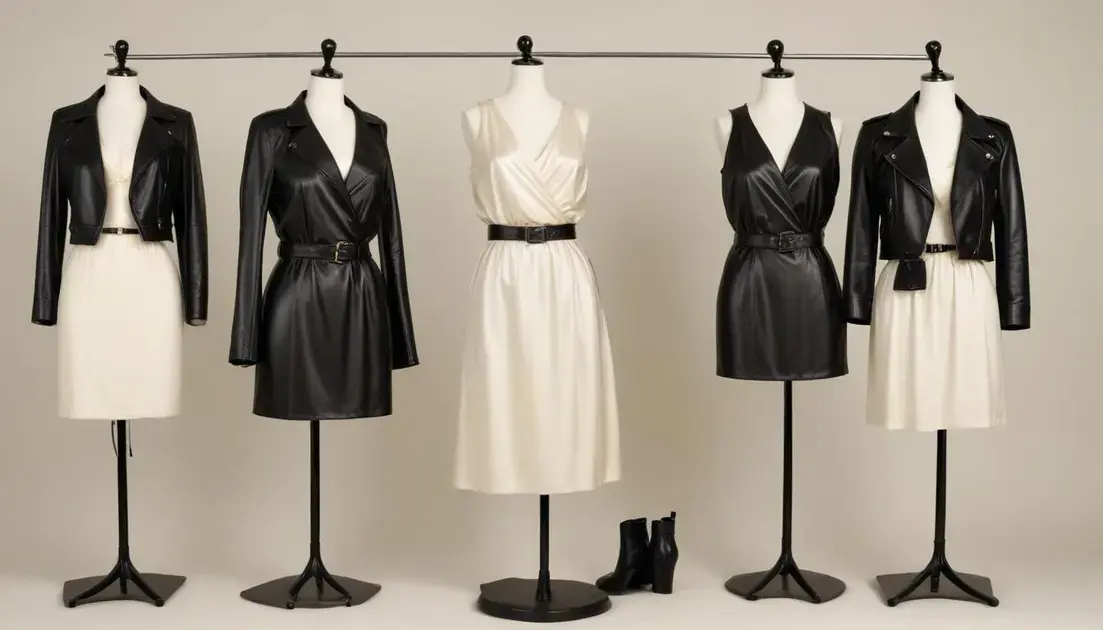
how to mix textures like leather and silk effectively works best when you use simple, repeatable outfit plans. These formulas save time and reduce guesswork.
Try a few mixes and tweak color, shape, and scale until the look feels balanced.
Easy outfit formulas to try
Start with one dominant piece and one supporting piece. Use these formulas as a base, then swap colors or accessories.
- Leather jacket + silk slip dress + ankle boots: edge on top, flow below; add a belt to define the waist.
- Silk blouse + leather skirt + flats: soft at the face, structured at the hips for a cleaner silhouette.
- Leather trousers + silk cami + blazer: strong lower line with a soft center; a light blazer ties the look.
- Silk scarf + leather coat + jeans: use silk as a brightness point and leather to anchor the outfit.
Keep proportions simple: pair tight with loose, short with long. This helps the eye move and keeps the outfit intentional.
Color and finish guide the vibe. Neutral tones make mixes subtle; one bold color makes a clear statement. Matte leather reads casual; glossy leather feels dressy. Match silk sheen to the mood.
Small styling moves that lift a look
Use accessories to bridge textures. A leather belt over a silk dress adds shape. A silk scarf near the face softens a heavy jacket. Shoes and bags can echo the dominant texture.
- Choose one focal point: if leather is bold, keep silk accents small.
- Layer for contrast: a short leather piece over a long silk layer creates modern balance.
- Mind scale: chunky leather with delicate silk can clash; aim for one clear scale.
Fit matters. Tailored leather pieces clean up relaxed silk shapes. Let the silk drape naturally; avoid tucking bulky leather into soft layers unless the cut is slim.
Test combinations in natural light. Look for where the eye rests and adjust color or accessory to guide it. Simple tweaks often fix what feels off.
With a few reliable formulas, mindful proportions, and small accessory moves, you can make leather and silk work together with ease and style.
FAQ – how to mix textures like leather and silk effectively
How do I start mixing leather and silk without overdoing it?
Begin with one dominant texture and one supporting piece. Choose a neutral color palette and test combinations with small items like a scarf or belt.
Which leather finishes work best with silk?
Matte or suede leather pairs well with satin or raw silk for a balanced look. Reserve glossy leather for controlled accents to avoid too much shine.
Can I wear leather and silk during the day?
Yes. Use matte finishes, subdued colors, and smaller silk pieces to keep the outfit casual and daytime-appropriate.
How should I care for outfits that mix leather and silk?
Spot-clean silk and use a soft cloth; condition leather separately and avoid machine washing. Store items so fabrics don’t rub together and cause wear.